
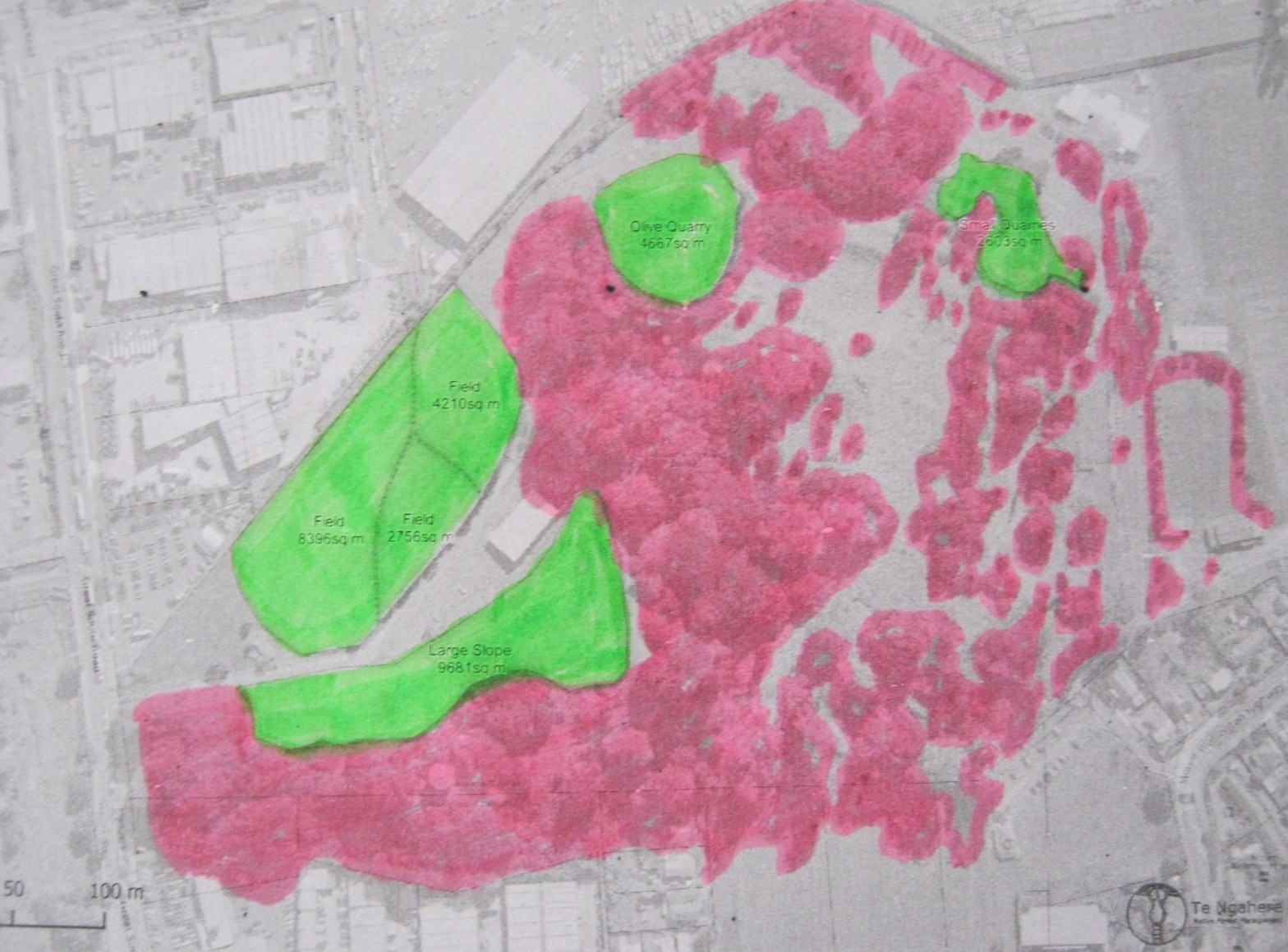
The pink area in the map above shows where the Authority intends to fell up to 3/4 of the entire tree cover. The green area is where the new plantings are going. Note that the circular green patch at the top is where the Authority felled a grove of 100 olive trees in 2019.
Tūpuna Maunga Authority tries to justify its tree felling intentions by saying they’re planting thousands of natives at each maunga. Yet a close look at the Ōtāhuhu Mt Richmond plantings details revealed the extent of the Authority’s spin.
Over time the Authority intends to fell up to 443 trees at this maunga – 75% of its entire tree cover – unless we can stop them. That’s on top of the 100 olives it felled in 2019.
When trying to defend the felling they say they will be planting around 39,000 natives to “replace” the exotics. That sounds impressive on face value but the reality is underwhelming.
It took more than five months and the Ombudsman’s intervention before the Authority released this information to one of our supporters. The supplied information showed the cost of felling around 60 trees at the maunga in 2023 was at least $384,947 for TreeScape and security. On top of that will be third party costs for preparing reports and resource consent applications, TMA staff time, etc. So the true costs will far higher than what is stated here.
2023 planting season budget – 10,803 native plants: $60,548 ($23,273 for plants, and $37,275 for mulch and planting). Analysis shows only 72 of those plants have the potential to grow to 18 m or more in the decades they will take to reach maturity – assuming they all survive.
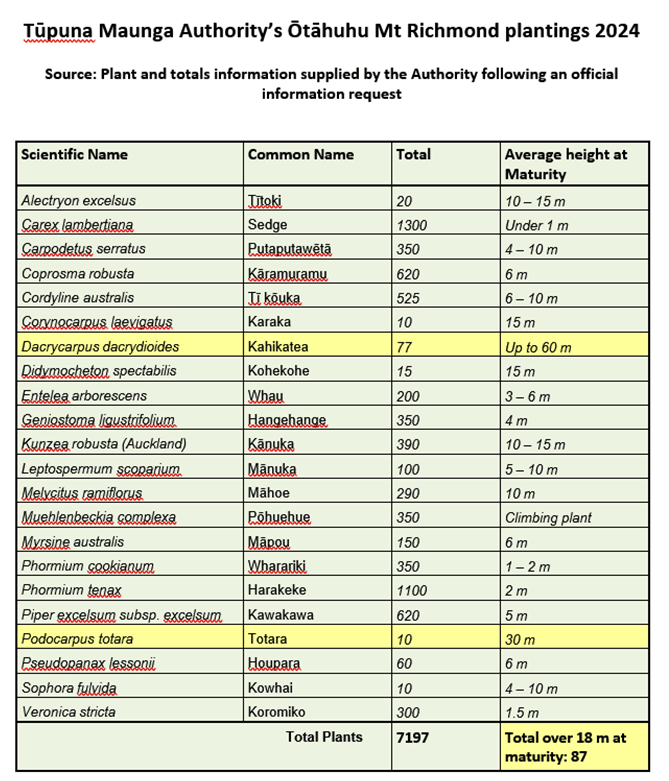
2024 planting season budget – 7197 native plants: $38,741 ($28,216 for plants and $10,525 for mulching costs). Analysis shows only 87 of those have the potential to grow to 18 m or more at maturity. Most of those tall tree species are the slow-growing kahikitea, which will take 50 years or more to grow higher than 18 m.
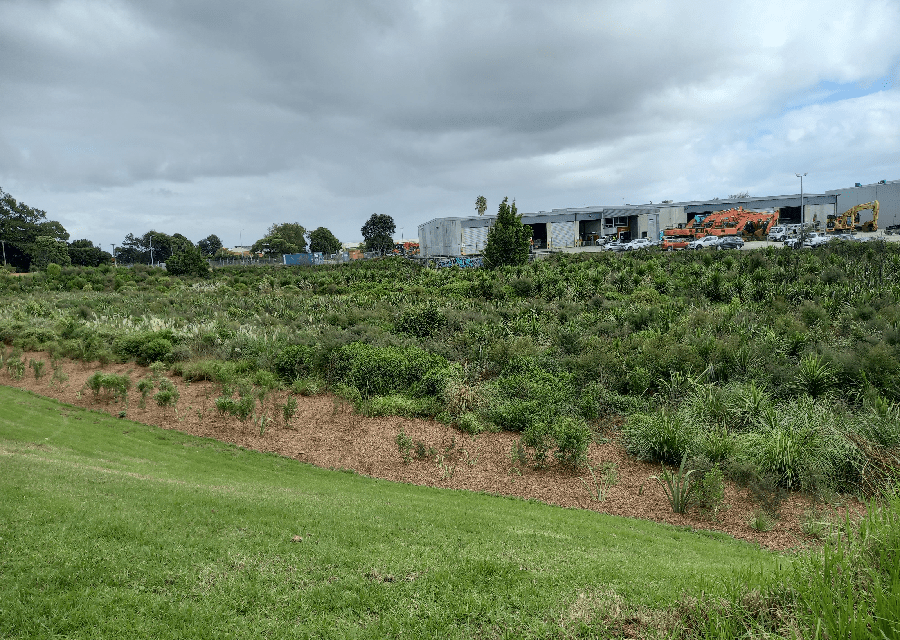
Two-year-old plantings (photo taken in 2023). As can be seen in the photo, the majority of plantings are low-growing species, not ones that will mature to become tall trees.
These plantings represent nearly half of the total intended plantings. As you can see above and in the tables below, only 159 of those plants have the potential to grow 18 metres or more at maturity – that’s less than 1% of the total. Lowering the bar a bit and analysing the numbers for species that could potentially grow to 16 m showed that only added another 35 trees. This recalculation showed species that might grow to 16 m or more represented in a tad over 1% of the total plantings. No matter how one looks at it, this is not an impressive number of tall tree species plantings.
The Authority also advised it spent $17,202 on plantings in the 2022 season but didn’t provide details of what they were. Based on the figures above, one could assume that accounted for maybe 3000 plants of which maybe 25-30 have the potential to grow to tall trees.
Based on the known costs, it looks like the TMA could end up spending at least $3 million at 2024 prices to fell up to 443 trees at Ōtāhuhu Mt Richmond and just over $1 million to plant. Yet almost all of the current and intended plantings are on different parts of the maunga to where the exotics are, so there’s no reason why the exotics can’t be retained alongside the new plantings and the $3 million instead put into something that’s positive (for people and wildlife alike), constructive and unifying.
And one last thing: Let’s now compare the Authority’s grand sounding intentions to plant 39,000 natives at Ōtāhuhu Mt Richmond with Tiritirimatangi (which has around 60% forest cover). Up to 300,000 natives were planted on the island over a 10-year period. Taking size differences into account, the TMA would need to plant up to 288,000 natives at Ōtāhuhu Mt Richmond to come anywhere close to Tiri. And far more of those would need to be tall tree species.

 Respect Mt Richmond / Ōtāhuhu